The secret to the perfect print colour
Have you ever printed something, and the colours seem dull, muted, and just not quite right? That is probably because you have been using RGB colour, rather than CMYK.
What’s the difference?
RGB is made up of three colours – Red, Green, and Blue, which are the primary colours of light (different than the classic primary colours of paint). In the RGB colour system, a scale of colours is created through the combination of red, green, and blue. This system is used in electronic displays such as the computer or phone you are reading this on and even cameras and TVs. These screens are made up of tiny red, green, and blue lights called pixels. Each pixel contains three even teenier lights: one red, one green, and, you guessed it, one blue. These glow with varying intensities to create over 16 million colours that appear on your screens. Clever, right?
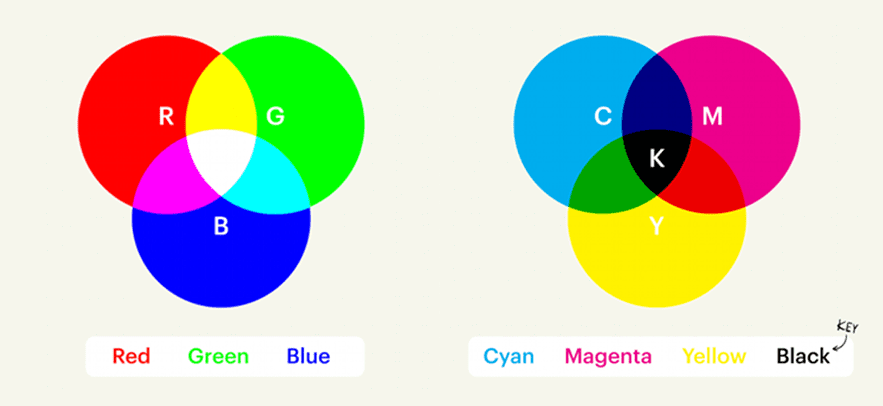
On the other hand, CMYK stands for Cyan, Magenta, Yellow, and Black. The K represents the colour black and can also be referred to as “key”, which comes from old school printing, where the “key plate” holds the primary image details in black ink. Unsurprisingly, this is the colour model used for printing. In the CMYK model, colours are created by layering ink which subtracts light. The more ink you add, the less light gets through the paper which results in darker, deeper shades of colour.
Why is CYMK best for print?
Lithography printing is a popular printing process used to print high quality materials at high volumes. The word lithography comes from the Greek words, ‘Lithos’ which means ‘stone and graphein’ meaning ‘to write’. Back then stones would have been carved and used like stencils. Nowadays, we use aluminium sheets which are referred to as “plates”. These plates are etched with your design and applied with wet ink, before being transferred to a rubber blanket, to then be printed onto paper.
Four plates are used in this process; one with cyan ink, one with magenta, one with yellow and the final one, with black ink (this is the key plate). As we learnt earlier, the layering of these four inks, will create millions of colours. Simply put, these four plates are why the CMYK model is used for print materials.
So, there you go, now you know something you didn’t know you needed to know.
Looking for top quality print? Look no further than Dragonfly. We’re here to add more colour to your direct mail campaigns – beyond CMYK! Don’t forget to subscribe to our newsletter and connect with us on LinkedIn for more insightful blogs on print, marketing, and direct mail.
